Key Takeaways
- Hexakraft Honeycomb Paper in Japan is becoming a preferred solution for protective and sustainable packaging across factories and precision production lines.
- It combines lightweight design with strong cushioning for safe product handling on high-volume packing stations.
- Supports eco-conscious packaging practices aligned with modern Japanese standards and strict waste management regulations.
- Suitable for e-commerce, electronics, automotive components, and industrial packaging applications.
- Partnering with Synerge Paper Industries adds consistency, reliable supply, and long-term value for Japanese factories.
Japan’s packaging industry is known worldwide for its precision, innovation, and meticulous attention to detail. Factories across sectors — from electronics and automotive to retail and e-commerce — demand packaging solutions that deliver both protection and production efficiency. As expectations continue to evolve and environmental standards tighten, the demand for advanced factory-grade materials like Hexakraft Honeycomb Paper in Japan is steadily increasing across manufacturing units and fulfilment hubs.
At Synerge Paper Industries, we recognise that packaging in Japan is not just functional; it reflects the quality and reliability of the brand behind the product. Factories are focusing on materials that support product safety on high-speed packing lines while aligning with national sustainability goals. Honeycomb paper has emerged as a solution that fits these requirements naturally — without disrupting the precision-driven workflows that Japanese factories are known for.
Understanding Hexakraft Honeycomb Paper
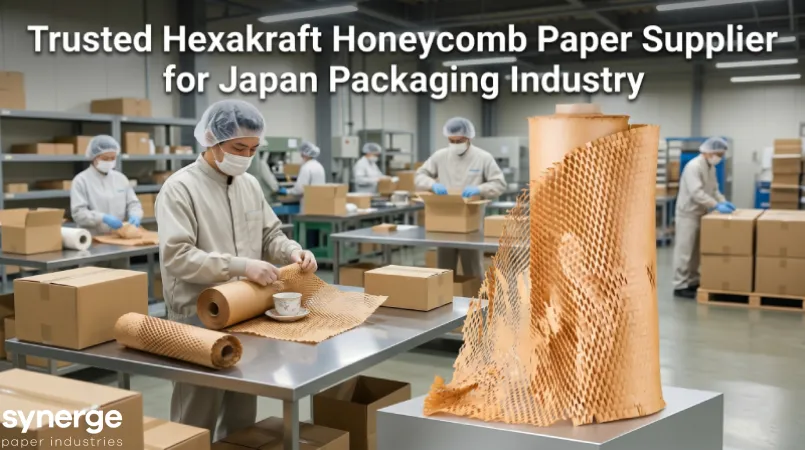
Hexakraft honeycomb paper is designed using a unique cellular structure that distributes weight evenly. This allows it to provide strong cushioning while remaining lightweight — a crucial factor when thousands of units move through a Japanese factory’s packing line every shift with zero tolerance for product damage.
Hexakraft Honeycomb Paper in Japan is widely used as a protective packaging material across manufacturing units and dispatch centres. It works effectively as a wrapping layer, cushioning material, corner protector, and void filler, making it highly versatile across multiple packaging stations inside a single production facility.
Key Features
- Lightweight yet durable structure that reduces load on packaging operators
- Flexible and easy to handle on automated and manual packing lines
- Strong shock absorption capability for precision electronics and industrial goods
- Environmentally responsible material meeting Japanese sustainability audits
These features make it suitable for industries that require both production performance and sustainability at the factory level.
Why Japan’s Packaging Industry is Adopting Honeycomb Paper
Japan places a strong emphasis on efficiency, quality, and environmental responsibility. Factories are constantly looking for packaging solutions that meet these high standards while supporting the country’s strict waste sorting and recycling systems.
Hexakraft Honeycomb Paper in Japan aligns well with these expectations by offering a balance between production-grade protection and environmental sustainability — both of which are non-negotiable in modern Japanese manufacturing.
Key Drivers
- Growing focus on eco-friendly packaging across Japanese industries
- Need for efficient and lightweight materials to reduce outbound freight cost
- High standards for product safety, especially for electronics and precision components
- Increasing demand in e-commerce and electronics export sectors
These factors have contributed to the rising adoption of honeycomb paper across factories, dispatch centres, and export-focused manufacturers.
Benefits of Hexakraft Honeycomb Paper
1. Lightweight and Strong Protection
One of the key advantages of Hexakraft Honeycomb Paper in Japan is its ability to provide reliable protection without adding weight. What this means for production: lower package weights, more units per pallet, and reduced outbound freight costs — a major advantage for Japanese factories exporting to global markets across long sea-freight routes.
2. Sustainable Packaging Solution
The material supports environmentally responsible practices, making it suitable for factories focusing on sustainability. What this means for production: factories can pass internal ESG audits, meet retailer compliance checklists, and reduce waste disposal costs under Japan’s strict industrial waste regulations.
3. Versatility Across Applications
It can be used for various packaging needs, including wrapping, cushioning, and void filling. What this means for production: one single material can serve multiple SKUs across different packing stations, reducing inventory complexity and simplifying material planning for the factory’s procurement team.
4. Cost Efficiency
Reduced shipping weight and improved protection contribute to overall cost savings. What this means for production: fewer damaged-in-transit returns, lower warranty replacement costs, and better margin retention per unit dispatched from the factory floor.
A Practical Scenario from a Japanese Factory Floor
Consider an electronics components manufacturer near Osaka producing around 12,000 precision units per day — including circuit modules and small sensors — for both domestic brands and overseas export markets.
Earlier, the packing department was using a combination of EPE foam inserts and plastic cushioning sheets. This created three recurring issues on the production floor: foam inserts added noticeable weight to each export carton (directly inflating air-freight costs), the operations team faced rising disposal charges under Japan’s industrial waste sorting system, and overseas buyers — especially in Europe — started flagging the plastic-heavy packaging during compliance audits.
After switching to Hexakraft Honeycomb Paper in Japan, the factory reported measurable improvements within one quarter. Carton weight dropped significantly, packing operators handled units faster because honeycomb sheets wrap cleanly around components, and the plant’s sustainability scorecard improved in the next internal audit. The overseas buyer also approved the new packaging format, which cleared one ongoing compliance concern.
This kind of real, measurable impact is exactly why more Japanese factories are moving towards honeycomb-based packaging for both domestic dispatches and global exports.
Applications Across Industries
The use of Hexakraft Honeycomb Paper in Japan spans multiple factory-level sectors, each benefiting from its protective properties.
Common Applications
- Protective wrapping for fragile products at dispatch stations
- Cushioning for electronics and precision equipment on assembly lines
- Void filling in shipping boxes for safe long-haul export transit
- Sustainable packaging for retail products moving to domestic stores
These applications highlight its flexibility and effectiveness across diverse Japanese factory environments.
How It Improves Packaging Efficiency
Efficiency is a key factor in packaging, especially in a market like Japan where precision and on-time dispatch matter more than almost anywhere else. Using Hexakraft Honeycomb Paper in Japan helps factories optimise their packaging processes without compromising the high quality standards buyers expect.
Efficiency Benefits
- Reduced shipping weight lowers transportation costs per export container
- Flexible material improves storage management inside the factory warehouse
- Better protection reduces product damage during transit
- Simplified packing workflow reduces operator handling time per unit
These improvements contribute to smoother factory operations and better customer satisfaction across both domestic and international markets.
Supplying to the Japan Market
Supplying packaging materials to Japan requires exceptional consistency, quality, and reliability — standards that match the precision-driven culture of Japanese manufacturing. Factories expect materials that perform identically across every shipment, with zero batch-to-batch variation.
At Synerge Paper Industries, we focus on delivering high-quality Hexakraft Honeycomb Paper in Japan that meets these demanding factory-level expectations. Our approach is centred around understanding real production needs and providing solutions that support long-term efficiency on the packing floor.
Supply Advantages
- Consistent product quality across every shipment, batch after batch
- Reliable supply chain aligned with Japanese production schedules
- Adaptability to different factory-level packaging requirements
- Focus on long-term partnerships rather than one-off transactions
These advantages help factories maintain uninterrupted production and dispatch operations — a critical factor for Japanese manufacturers running just-in-time production systems.
Future of Packaging in Japan
The future of packaging in Japan is focused on sustainability and production efficiency. Factories are moving towards materials that reduce environmental impact while maintaining the high-performance standards expected in Japanese manufacturing.
Hexakraft Honeycomb Paper in Japan is becoming an important part of this transition. Its ability to combine strength, flexibility, and sustainability makes it a valuable choice for modern factory-level packaging operations across multiple industries.
As the industry evolves and global export compliance standards tighten, the demand for such materials will continue to grow across Japanese manufacturing and e-commerce sectors.
Why Choose Us
At Synerge Paper Industries, we focus on delivering packaging solutions that match the evolving needs of global factories and precision-driven Japanese industries. We understand the importance of quality, reliability, and production performance, especially when supplying Hexakraft Honeycomb Paper in Japan. Our approach is built on providing materials that support both factory efficiency and sustainability while maintaining absolute batch-to-batch consistency. We work closely with our clients, offering solutions that align with their packaging requirements and long-term production goals. Choosing us means partnering with a team that values dependable supply and practical factory-ready packaging solutions.
Conclusion
The packaging industry in Japan continues to evolve with a strong focus on precision, sustainability, and factory-level efficiency. Hexakraft Honeycomb Paper in Japan offers a practical solution that meets these requirements by combining lightweight design with strong protection on high-volume production lines. It supports factories in reducing shipping costs, improving product safety during long export transit, and aligning with eco-conscious Japanese practices. As factories and brands adapt to changing market demands and environmental expectations, adopting advanced factory-grade packaging materials becomes essential. Honeycomb paper stands out as a reliable option that supports both operational efficiency and responsible packaging strategies in a highly competitive Japanese market.
Looking for trusted Hexakraft Honeycomb Paper in Japan? Call +91 9727242177 or email mohit@synergeindustries.com for reliable and efficient packaging solutions tailored to your factory’s production needs.
FAQs
What is the purpose of Hexakraft honeycomb paper?
It is used for protective packaging, cushioning, and wrapping products during transit from factory dispatch to customer doorstep.
Why is Hexakraft Honeycomb Paper in Japan popular?
It offers sustainable, lightweight, and cost-effective packaging solutions for precision-driven Japanese factories and export operations.
Can it protect fragile items?
Indeed, it offers superior shock absorption and cushioning, making it ideal for electronics and precision components handled on factory lines.
Is it environmentally friendly?
Yes, it supports eco-conscious packaging practices aligned with Japan’s strict waste management and recycling standards.
Why choose Synerge Paper Industries?
Because of consistent quality, reliable supply, and strong understanding of real factory-level packaging requirements.